The first wave: priority product groups
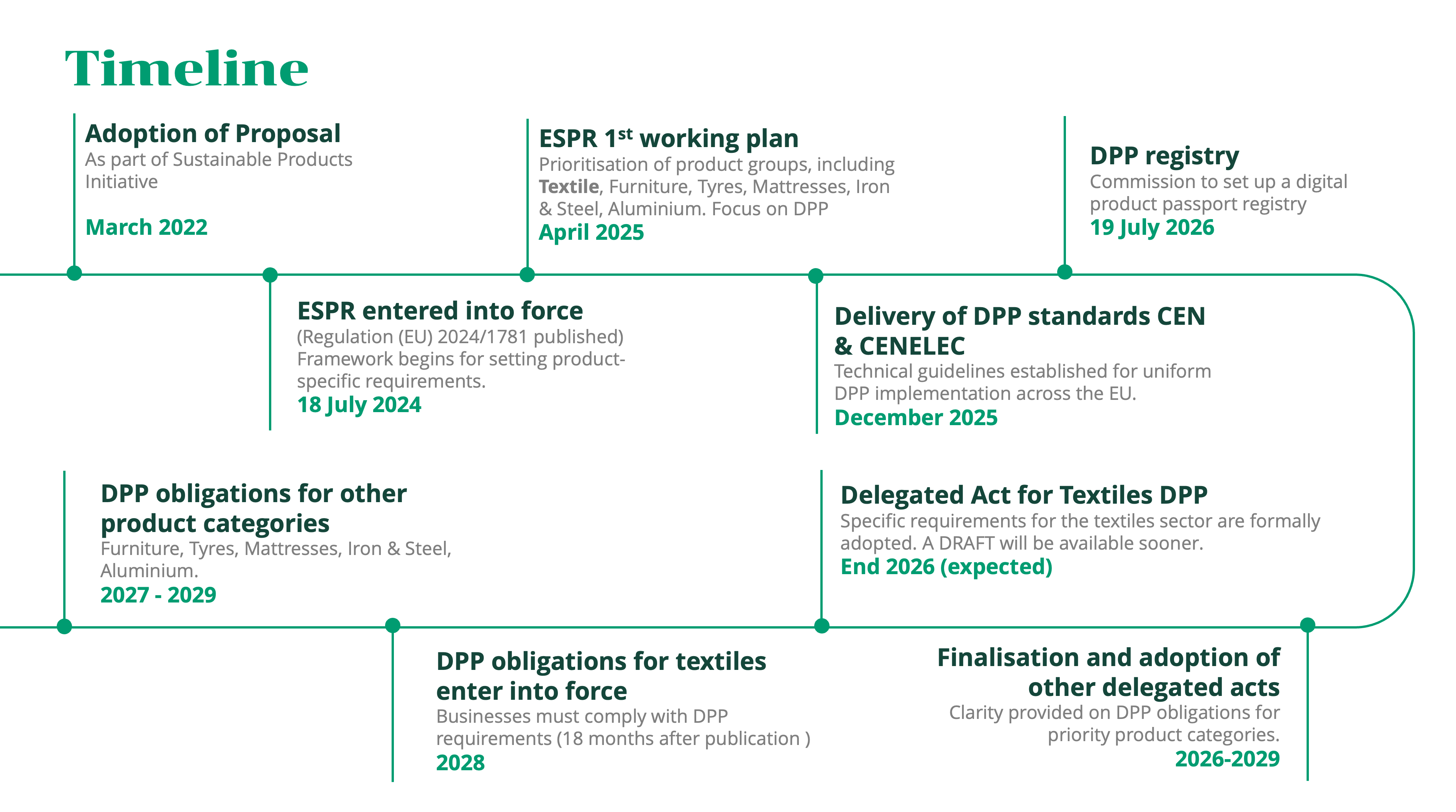
The first wave of DPP regulations will launch according to the ESPR and Energy Labelling working plan for 2025-2030.
- Iron and steel (2026)
- Industrial and EV batteries over 2kWh (2027)
- Textiles/apparel (2027)
- Tyres (2027)
- Aluminium (2027)
- Furniture (2028)
- Mattresses (2029)
If your business is active in any of these sectors, the DPP is no longer a distant concept, but a concrete compliance deadline that you need to start acting on.
The second wave: other key regulations
The DPP's role doesn't stop with the priority list. Digital Product Passports will also be a core component in several other key EU regulations related to transparency, safety and traceability.
However, establishing a precise timeline is difficult: many regulations and their deadlines are subject to change. With that in mind, here are some initiatives that will feature the DPP:
EU Strategy for Sustainable and Circular Textiles
Here, the DPP is the primary tool to verify 'green claims' and give consumers reliable information on the durability, repairability, and recyclability of textiles.
Revised EU Toy Safety Regulation
All toys sold in the EU will need a visible DPP to prove they meet safety standards. This will simplify market surveillance for authorities and give consumers easy access to safety warnings.
Revised Detergent & Surfactant Regulation
The DPP will be key for providing accessible product information that increases product safety and market access for all detergent products.
Construction Products Regulation (CPR)
The DPP will support the CPR by ensuring construction products in Europe meet strict safety and environmental requirements.
The future: who's next?
The EU's long-term vision for the DPP is extensive. A wide range of other product groups are already being considered for future waves of implementation. The concrete timelines are not yet fixed, but if your business deals with any of the following, the DPP is very likely in your future:
- Electronics-related products
- Chemicals, paints, and varnishes
- Plastics and polymers
- Footwear
- And many more
It's worth noting the specific situation for electronics. The decision on a DPP will be made per product type (e.g., for dishwashers, smartphones, ...). For some categories, the EU may decide to use existing systems like the EPREL database instead of mandating a brand-new DPP.
Overall, the message is clear: the DPP will become a reality for most, if not all physical product sectors.